
No, skipping Miranda warnings rarely causes a DWI or DUI case to be dropped outright. In New York, the police have an obligation to read you your rights at a certain stage in the arrest, but whether or not your rights are read is not necessarily indicative of whether or not your case will be dropped. When officers do violate the Miranda rules, the usual result is suppression of certain statements, not automatic dismissal, and that can still change the outcome of your case.
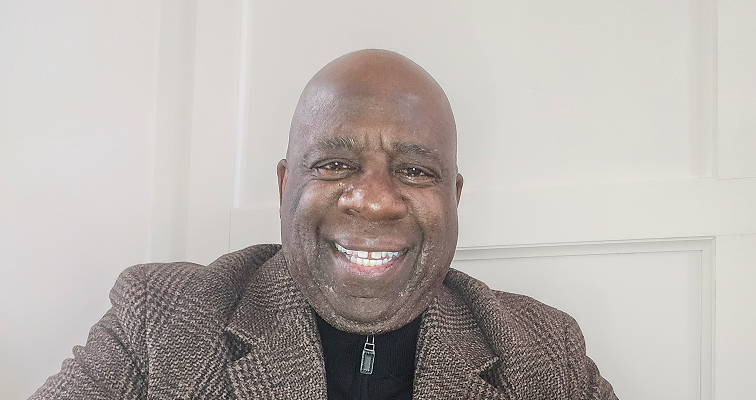
The Inniss Firm, PLLC defends drivers charged with DWI and DUI throughout Middletown and the Hudson Valley, including people trying to understand how Miranda issues fit into a first-time DWI arrest. Middletown DWI Lawyer Randall F. Inniss is a former New York State Trooper and Certified Breathalyzer Operator, giving him a direct view of how these cases are built and where police procedure breaks down.
This guide explains what Miranda rights are and where they come from, how they apply to field sobriety tests and roadside breath tests, and what a Miranda violation actually does to a case. If Miranda warnings may be an issue in your DWI case, contact us at (845) 533-0265 to schedule a consultation and discuss the facts of your situation.
What Are Miranda Rights and Where Do They Come From?
Miranda rights come from the United States Supreme Court decision in Miranda v. Arizona, 384 U.S. 436 (1966). The Court held that before police question a person who is in custody, they must warn that person of certain rights. These warnings protect you from being pressured into incriminating yourself while you are held by the police.
Miranda warnings are mainly a safeguard for the Fifth Amendment right against compelled self-incrimination during custodial interrogation. The warning also includes the right to consult with an attorney before and during questioning. The separate Sixth Amendment right-to-counsel rules may apply after formal criminal proceedings begin.
In practical terms, the warning tells you that you have the right to remain silent, that anything you say can be used against you, that you have the right to a lawyer, and that a lawyer will be provided if you cannot afford one. These rights exist to keep custodial questioning fair. They do not, by themselves, decide whether a DWI charge survives or fails.
Key Takeaway: Miranda rights stem from the Fifth and Sixth Amendments and the Supreme Court’s ruling in Miranda v. Arizona. They protect against self-incrimination during custodial questioning, but they are not a guarantee that a DWI case will be dismissed.
When Are New York Police Required to Read Miranda Rights?
The police have an obligation to read you your rights when you are in custody, subjected to interrogation or its functional equivalent. Both parts of that test must be present at the same time before the warning is required.
This two-part trigger means a Miranda warning is required only when you are (1) in custody and (2) about to be interrogated. Interrogation includes direct questioning and police words or actions that they should know are reasonably likely to elicit an incriminating response. If you are in custody but no one questions you, the warning is not triggered. If officers ask you questions but you are not in custody, the warning is also not triggered. Courts in New York evaluate both elements based on the specific facts of each stop and arrest.
Key Takeaway: New York police must read Miranda warnings only when both conditions are met: you are in custody and police intend to interrogate you. If either element is missing, the warning is not required.
What Does “In Custody” Mean During a NY DWI Stop?
A roadside traffic stop is not considered “custody” for Miranda purposes. When an officer pulls you over and asks preliminary questions at the side of the road, you have not yet been formally arrested, and courts usually treat that brief detention as something less than custody. That is why questions asked during the initial stop often fall outside Miranda’s protection.
Custody means a formal arrest or restraint on freedom of movement comparable to a formal arrest. The line between a roadside detention and a formal arrest is fact-specific, and the timing matters. Custody often exists after a formal arrest, but transport to the station is not required if the surrounding facts show restraint comparable to a formal arrest. Whether you were “in custody” at the moment you were questioned is often a central issue in a DWI defense.
What Counts as Interrogation Under New York Law?
Interrogation includes more than direct questions. It covers express questioning and any words or actions by police that they should know are reasonably likely to elicit an incriminating response. An officer does not have to ask a formal question for the conduct to count as interrogation.
Not all questions qualify. After arrest, police may ask routine booking or pedigree questions, such as name, address, date of birth, height, and weight, without Miranda warnings, unless the question is reasonably likely to elicit an incriminating response. Law enforcement is not required by a constitutional mandate to read you your rights before they ask these questions. These routine booking questions are treated as administrative, not interrogation.
Does Miranda Apply to Field Sobriety Tests in New York?
Field sobriety tests are treated as physical or performance tests, not testimonial statements. When you perform the walk-and-turn, the one-leg stand, or follow an officer’s pen with your eyes, you are providing physical evidence of coordination and balance rather than answering questions. Because Miranda protects against compelled self-incriminating statements, it usually does not apply to the physical performance itself.
This is a common point of confusion. Many people assume that because officers did not read them their rights before the field sobriety tests, the results cannot be used. In most cases, the physical results of the tests can still be used as evidence. What may be challenged separately is how the tests were administered, whether the officer followed standardized procedures, and whether the conditions were fair.
Key Takeaway: Miranda warnings are not required before field sobriety tests because the tests produce physical evidence, not testimonial statements. The way the tests were conducted can still be challenged on other grounds.
Does Miranda Apply to Roadside Breath Tests in New York?
A roadside preliminary breath test (PBT) is different from the chemical test taken later at the station. The roadside device gives officers a preliminary reading during the stop and is not the official chemical test used to prove a per se DWI. Like field sobriety tests, the breath sample is treated as physical evidence rather than a statement, so Miranda warnings are not required before it.
The chemical test at the station is governed by New York’s implied consent law, not by Miranda. Under New York Vehicle and Traffic Law § 1194, any person who operates a motor vehicle in the state is deemed to have given consent to chemical testing of breath, blood, urine, or saliva when the statute’s conditions are met, including reasonable grounds and applicable timing requirements. Refusing a chemical test can trigger separate license and civil penalties under New York’s implied consent law. It is separate from whether statements are suppressible under Miranda.
Because both the breath sample and the chemical test result are physical evidence, Miranda does not shield you from them. This is one reason a missing Miranda warning, by itself, does not undo the core evidence in many DWI cases.
Key Takeaway: Roadside and station breath tests produce physical evidence and fall under New York’s implied consent law, not Miranda. A missing Miranda warning does not suppress breath or chemical test results.
Middletown DWI Lawyer — The Inniss Firm, PLLC
What Happens When Police Violate Miranda Rights in a NY DWI Case?
When police question you in custody without first giving the Miranda warning, the remedy is suppression of the statements you made, not automatic dismissal of the charge. That is why a missing Miranda warning does not, by itself, show that a DWI or DUI case would be dismissed. The court does not throw out the entire case simply because the warning was skipped.
To raise a Miranda violation, your defense attorney files a motion to suppress the statements. Under New York Criminal Procedure Law § 60.45, a statement that was involuntarily made, including a statement obtained in violation of your constitutional rights, cannot be used against you at trial. The court may hold a suppression hearing to decide whether the statement can be used or not. A motion to suppress that type of statement is authorized under CPL § 710.20.
Key Takeaway: A Miranda violation in a New York DWI case leads to suppression of improperly obtained statements, not automatic dismissal. The defense raises the issue through a suppression motion under CPL § 60.45.
What Is a Huntley Hearing in a New York DWI Case?
A Huntley hearing is New York’s pre-trial hearing for deciding whether statements you made to police can be used against you. It is named after People v. Huntley, 15 N.Y.2d 72 (1965), the case that established this procedure. At the hearing, the prosecution must show that your statements were made voluntarily and, where required, after a proper Miranda warning.
If the court finds that you were in custody, that you were interrogated, and that no valid Miranda warning was given, it can suppress those statements. This is where Miranda violations are actually argued in New York courts, rather than being a basis for dismissing the case at the start.
Can Suppressed Evidence Still Get a Case Dismissed?
Yes, in some situations. If the suppressed statements were central to the prosecution’s case, removing them can leave the prosecution with too little evidence to proceed. That can lead to reduced charges or, in some cases, dismissal.
The impact depends on how much the case relied on your statements versus other evidence, such as breath test results, field sobriety tests, and officer observations. A confession or an admission that you had been drinking can be far more damaging than the prosecution’s other evidence, so suppressing it may significantly weaken the case.
Key Takeaway: Suppressing statements does not automatically end a case, but if those statements were important to the prosecution, the case may become too weak to continue, leading to a reduction or dismissal.
What Statements Can Be Used Against You in a NY DWI Arrest?
Not every statement carries the same risk. New York DWI cases involve three categories of evidence that are treated differently when it comes to Miranda.
- Voluntary statements: Things you say on your own, before any custodial interrogation or without being prompted, are admissible. A spontaneous comment to an officer is usually not protected by Miranda.
- Custodial statements without Miranda: Answers given while you are in custody and being interrogated, without a proper warning, may be suppressible through a Huntley hearing.
- Physical evidence: Breath test results, blood draws, and field sobriety test performance are physical evidence and are not affected by Miranda at all.
The statements that matter most for suppression are the ones that address whether you were drinking, where you were coming from, or how much you had to drink.
Because voluntary comments can easily hurt your case, knowing how to protect yourself during a stop is critical. Under binding Supreme Court rulings like Berghuis v. Thompkins and Salinas v. Texas, you must explicitly tell the officer that you are choosing to remain silent and that you want a lawyer. Simply staying quiet without stating your intent does not legally invoke your rights and will not stop police from questioning you.
Key Takeaway: Voluntary statements and physical evidence usually stay in a DWI case, while custodial statements taken without a Miranda warning may be suppressed. Routine booking questions do not require a warning.
Can You Be Arrested for DWI Hours After an Incident in New York?
In some circumstances, a New York DWI arrest can happen after an incident, even if the officer did not personally see you driving. However, the police are required to approach this properly, ensuring that very little to no intervening action has occurred that would affect probable cause or proof of impairment at the time of driving. The delay between the incident and the arrest does not, by itself, make the arrest invalid.
For example, if police investigate an accident hours after it happened, they will likely question you to figure out exactly when you were drinking. Because the state’s case relies so heavily on your own timeline of events in a delayed arrest, Miranda protections become critical the moment that late-stage questioning turns into a custodial interrogation.
Miranda timing follows the same two-part rule in a delayed arrest. The warning is only required once you are both in custody and about to be interrogated, which in a delayed arrest usually means after officers locate you and take you into custody. Statements you make before that point, including spontaneous comments at the scene of an accident, may be treated as voluntary and admissible.
Key Takeaway: New York allows DWI arrests hours after an incident depending on the facts, and post-incident drinking can complicate the investigation. Miranda still only applies once you are in custody and being interrogated.
What Are the DWI Charge Types in New York State?
New York defines its alcohol and drug-related driving offenses under Vehicle and Traffic Law § 1192. The charge you face depends largely on your blood alcohol content (BAC) and other evidence of impairment. These charges carry serious penalties, which is why preserving every available defense, including any Miranda issue, matters to the outcome.
The table below summarizes the main charge types and their thresholds, based on data from the New York Department of Motor Vehicles.
| Charge Type | BAC / Standard | First Offense Level |
|---|---|---|
| DWAI / Alcohol | More than .05 up to .07, or other evidence of impairment | Traffic infraction |
| DWI (per se) | .08 BAC or higher | Misdemeanor |
| Aggravated DWI | .18 BAC or higher | Misdemeanor |
| DWAI / Drug | Impairment by a single drug | Misdemeanor |
| DWAI / Combination | Combined drugs and alcohol | Misdemeanor |
| Zero Tolerance | .02 to .07 BAC, driver under 21 | Civil penalty |
| Commercial motor vehicle DWI | .04 BAC or higher | Misdemeanor |
A first DWI conviction can mean a fine of $500 to $1,000, up to one year in jail, and license revocation for at least six months. An Aggravated DWI carries a fine of $1,000 to $2,500, a revocation of at least one year, and a jail sentence for up to one year. Because penalties can affect your license, finances, and record, it is important to review any Miranda issue or other procedural concern.
Key Takeaway: New York DWI charges range from a traffic infraction for first-offense DWAI/Alcohol, misdemeanors for many first-offense DWI-related charges, and felonies for certain repeat or aggravated situations. The seriousness of these penalties is why every available defense matters.
Get Help from a Middletown DWI Lawyer
A missing Miranda warning does not automatically lead to dismissal, but it may affect whether certain statements can be used in a DWI case. The Inniss Firm, PLLC can review the facts and explain whether Miranda issues may apply.
Randall F. Inniss brings more than two decades of legal experience to every DWI case he handles throughout Middletown and the Hudson Valley. He understands how DWI arrests are built and where procedure breaks down, and he uses that knowledge to challenge the prosecution’s evidence.
Miranda issues may affect whether certain statements can be used in a DWI case. To discuss a DWI charge and whether Miranda issues may be relevant, contact The Inniss Firm, PLLC at (845) 533-0265 to schedule a case review. We are located at Westside Plaza, 280 Route-211, Suite 203, Middletown, NY 10940, and serve clients in Orange County and the surrounding Hudson Valley region.
Frequently Asked Questions about Miranda Rights in DWI
Will my NY DWI case be dropped if police skipped Miranda?
Rarely. A Miranda violation usually leads to suppression of statements you made in custody, not automatic dismissal of the charge. If those statements were central to the case, suppressing them can weaken the prosecution enough to lead to a reduction or dismissal.
Does Miranda apply before I’m formally arrested in New York?
No. Roadside questioning during a traffic stop is typically treated as pre-custody, so Miranda warnings are usually not required at that point. The warning is triggered only once you are in custody and the police intend to interrogate you.
Can I refuse to answer questions during a NY DWI stop?
Yes, but you must speak up to invoke your right. Under U.S. Supreme Court rulings, simply staying quiet is not enough to legally protect you. To clearly invoke your right to remain silent, you must explicitly tell the officer that you are choosing to remain silent and that you want a lawyer.
What is a Huntley hearing and do I need one?
A Huntley hearing is a New York pre-trial hearing where the court decides whether statements you made to police can be used against you. Your attorney requests it when there is a basis to argue that statements were taken involuntarily or without a proper Miranda warning.
Does refusing a breath test protect me the same way Miranda does?
No. Refusing a chemical test triggers penalties under New York’s implied consent law, including license revocation and a civil penalty, and it is a separate legal issue from Miranda. Miranda concerns custodial questioning, not chemical testing.
via The Inniss Firm, PLLC https://www.trooper2lawyer.com/miranda-rights-and-dui-dwi-charges-in-new-york/


No comments:
Post a Comment